



Stand Out
Give customers a reason to choose you instead of looking like everyone else selling essentially the same thing.
Run Smoother
Less friction. Better systems. Clearer responsibilities. Fewer problems landing on the owner's desk.
Organizational Development Strategy Consultant
Generate More Revenue!
Find the revenue you're missing, the money you're wasting, and the opportunities sitting inside the business you're already running.
Make it better.
First, we figure out what’s really happening beneath the obvious problem.
Then we identify what needs to change. And often, simply seeing the real issue clearly starts to change the way people think, communicate and work together.
From there, we identify what needs to change and work with the people involved so the business becomes clearer, easier and more effective.
Then we measure what actually changed and whether it made the business better.
Results
Savings and Efficiency
Annual expenses reduced by $146,000.
$178,000 negotiated in savings.
Staff retention and loyalty increased by 20%
Day-to-day operations became easier to run.
Less time was spent fixing the same problems over and over.
Revenue & Growth
Revenue increases from 32% to 100% across multiple departments.
More than $20,000 a month in new aircraft revenue.
Profits grew from roughly $1.4 million over three years to more than $4 million.
Average trade-show sales increased about 40%.
Will came into my life to accelerate my growth at just the right moment… cleaning a window to my world.
Victoria R., CIO
I quickly learned of his insight and vision within business. His outlook on life and helping others is inspiring
Andrew F., Founder
William has always impressed me with his ability to think outside the box and come up with creative solutions to complex problems.
Jason F., IT Director
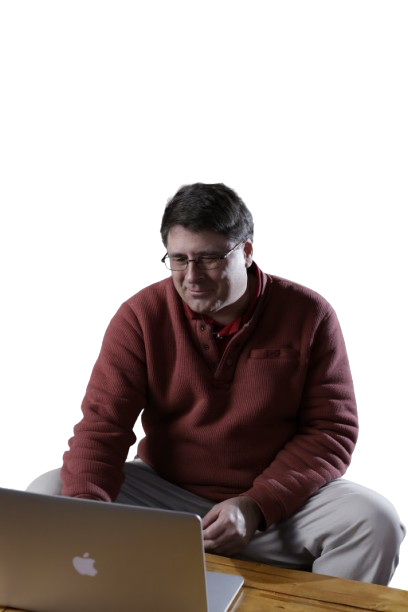
I’m William.
For over three decades, I’ve worked with people and businesses when something important isn’t working the way it should. My background is unusual because I’ve worked across operations, aviation, events, counseling and business advising, although the common thread has always been the same: what is happening underneath the obvious problem.
Over the years, I’ve been brought into situations where the problem initially looked operational, financial, organizational or interpersonal, and very often the real issue was somewhere else. I’m particularly good at seeing those patterns, asking the questions other people aren’t asking, and working with leadership to understand what is actually getting in the way.
That has translated into measurable results across very different businesses. In one resort operation, revenue increased anywhere from 32% to 100% across multiple departments while annual expenses dropped by $146,000. In aviation, I negotiated $178,000 in savings and helped create more than $20,000 a month in new aircraft revenue. In another business, average trade-show sales increased about 40%, while profits grew from roughly $1.4 million over three years to more than $4 million.
A lot of my work happens directly with owners and senior leadership. I can move between the leadership vision and what is actually happening on the ground, work with the people involved, and help turn that into practical changes that make the company work better.
My strengths are big-picture thinking, pattern recognition and human dynamics. I’m comfortable walking into something complicated without already knowing the answer because figuring out the real problem is usually the most important part of the work.
At this point in my career as a consultant, I work with companies up to roughly 500 employees and $100 million in annual revenue. I’m looking for situations where I can operate at that broader organizational level, helping leadership make the business itself stronger rather than simply managing one piece of it.
Would now be a bad time to talk? Proactive beats reactive every time.
Text or Call
Also on WhatsApp.
Expect a reply practically immediately.
Sooner if the tea is strong.
Definitely sooner if it’s oolong.
Business Runs Smoother, Stand Out, Generate More Revenue!